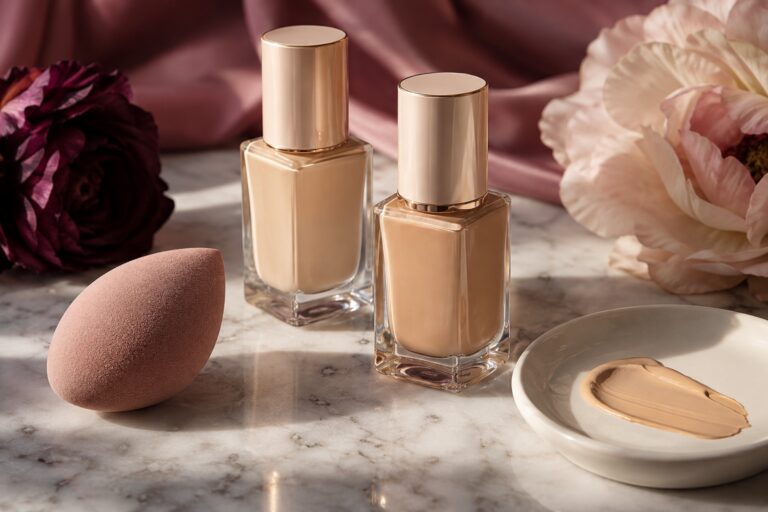
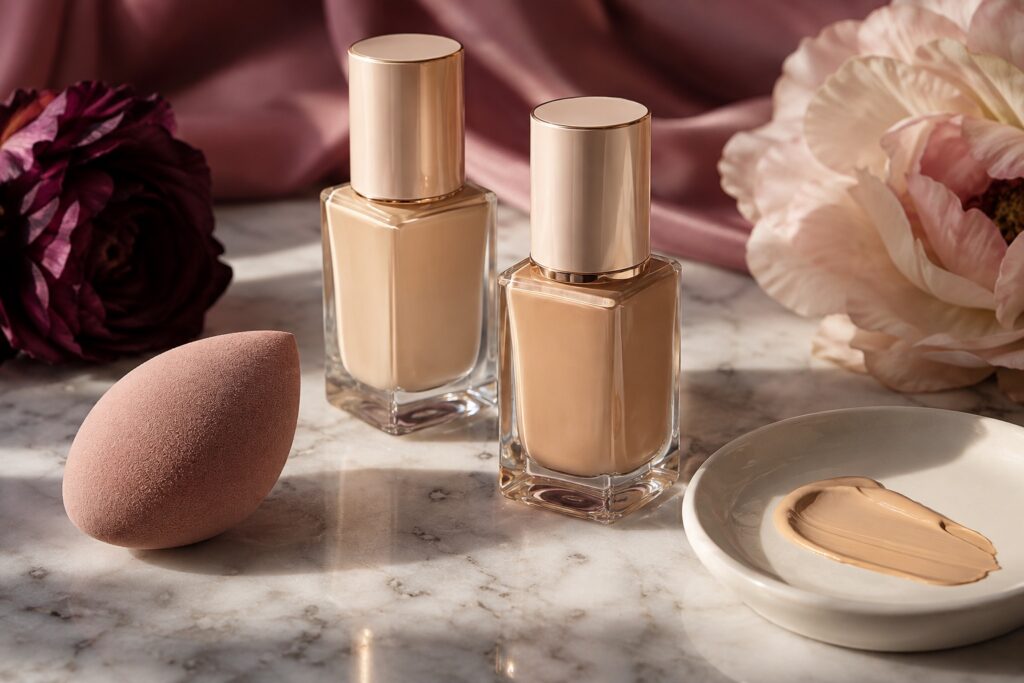
AI-created editorial photo. Not the specific reviewed product.
A foundation can be matte without being full coverage, and it can offer buildable coverage without promising an opaque result. Reading those claims separately makes shopping easier. Instead of asking which formula is best in general, ask which description fits the look and routine you want to create.
Finish describes surface appearance
Matte usually points toward less visible shine. Dewy or radiant language points toward a more reflective look. Natural or satin is often used for a middle direction, but brands do not all use those words in exactly the same way. Keep the manufacturer’s wording in your notes rather than forcing every formula into a strict scale.
For example, one product may say natural matte while another says natural radiant. The shared word natural does not make them identical. Note what you want to see in your own routine, then use the descriptions to identify candidates worth assessing under the lighting that matters to you.
Coverage describes what shows through
Light, medium and full describe the intended degree of visible coverage. Buildable says you can add product toward a stronger effect, but it does not promise unlimited layering or the same result from every application. Keep your desired coverage separate from your preferred amount of shine.
A practical note might say medium coverage overall, with less product where no extra coverage is wanted. Another might say light coverage throughout. These are personal goals, not rules about what anyone needs to hide. The purpose is to make your own preference specific enough to compare with a label.
Format describes how you handle the product
A liquid bottle and a stick can share a product-family name while having different directions and coverage positioning. Record the format beside the finish and coverage, especially when following a shopping link. An attractive package is only useful if its application routine fits the way you want to get ready.
Do not silently add a suggested powder or primer to the foundation’s performance. If a wear claim describes a combined routine, keep those products in the note. You can then decide whether you want that full setup and its additional steps, instead of comparing it with another foundation used alone.
Convert the label into a short decision
Write three lines: preferred finish, preferred coverage and acceptable application format. Add one unresolved question such as whether the color works after blending. This is enough to narrow a shelf of similar-looking bottles without pretending that the labels are a personal wear test.
After trying a candidate appropriately, record what you observed using the same three categories. A formula may meet one preference and miss another. That detail gives you a useful next step, while a single overall rating often hides the information you need to make a better choice.
Read next
Complexion Liquids Compared: Finish, Coverage and Shade Records