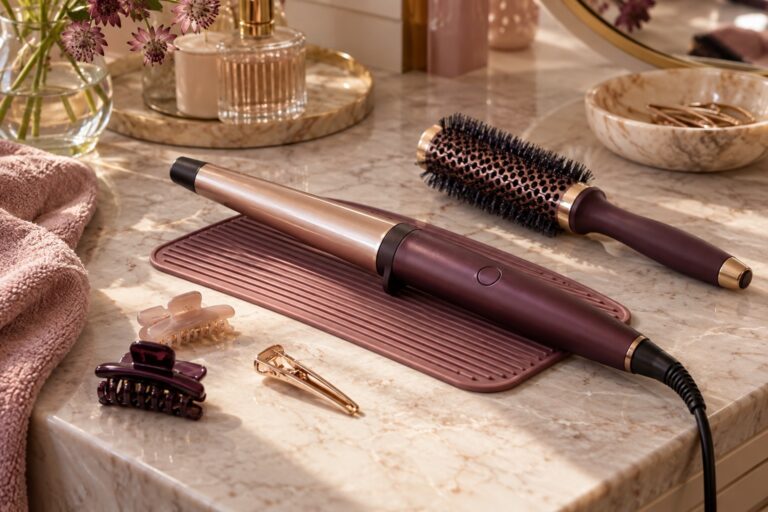
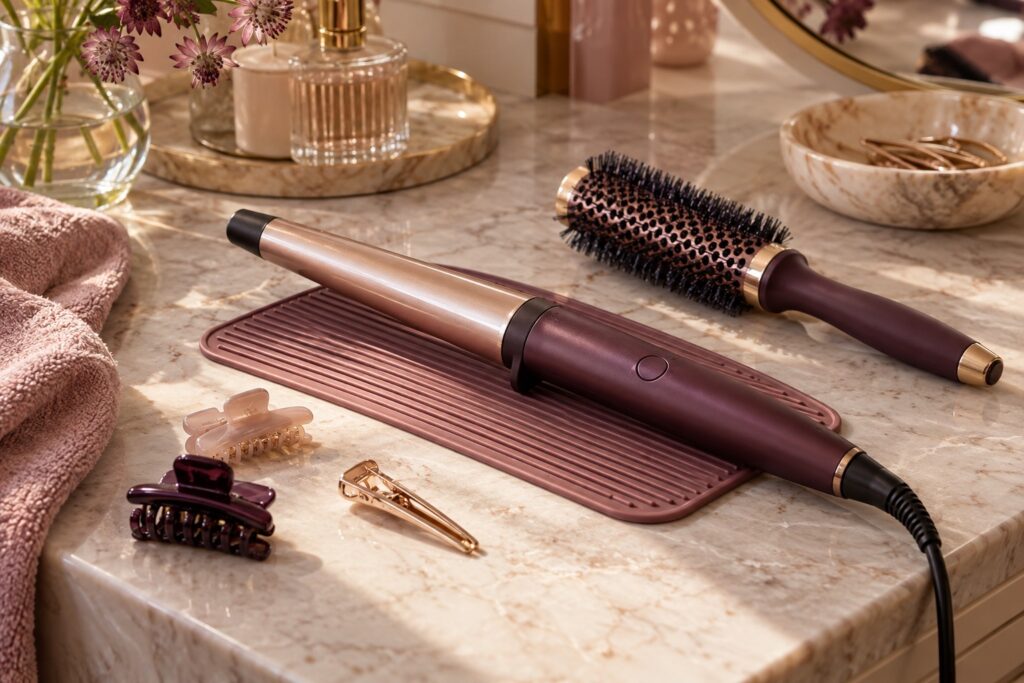
AI-created editorial photo. Not the specific reviewed product.
A saved hair tutorial is easier to revisit when you can see its sequence without replaying the whole video. Make a short personal note in your own words, keeping the original link for context. The aim is to remember what you want to practice, not to promise that copying a demonstration will produce the same result.
Give the note one purpose
Write the movement or stage you want to learn, such as organizing sections before curling or understanding how a clamp is used. A narrow purpose helps you identify the relevant part of the tutorial. It also makes a short practice session more realistic than trying to recreate an entire finished look immediately.
Record the tutorial’s date or version if it distinguishes tool generations. Keep the exact tool shown beside the tool you own. If they differ, mark that difference before copying any operating step. A shared shape or brand does not establish that the same instructions apply.
Separate preparation from styling
Add a preparation line for the brush, clips and starting hair condition shown. Keep a detangling brush separate from a heated tool in the list. If the tutorial skips preparation, write that it was not shown instead of filling the gap with an assumption.
Check your own tool’s instructions before practice. For example, T3’s Curl X manual begins with dry, detangled hair, and ghd’s curling guidance specifies dry hair. These requirements still apply when a short video cuts directly to styling. Do not treat an omitted drying stage as permission to skip it.
Write the sequence as observable actions
Use a few plain steps such as prepare, divide, position, release and finish, adding detail only where it helps you remember the demonstration. Note which hand or side is shown if the camera view makes it confusing. Keep the original timestamp beside a movement you need to replay.
Do not copy a heat setting or contact time from another tool as a universal instruction. Refer back to your exact manual for those operating details. If the tutorial and manual appear inconsistent, leave the step unresolved rather than choosing whichever looks easier in the video.
End with a useful practice record
After a session, write what you actually observed: a section was hard to reach, the setup felt crowded or the sequence was difficult to remember. Distinguish those observations from predictions about future results. One unsuccessful attempt does not prove that a different product is necessary.
Choose a single adjustment for the next session, such as preparing clips earlier or reviewing a camera angle. Keep preparation notes with the brush and tool list so that the next attempt starts from known conditions. A short, accurate record is more useful than an elaborate routine built around steps you have not understood.
Read next
Curling Tools Compared: Barrel Dimensions, Controls and Exact Versions