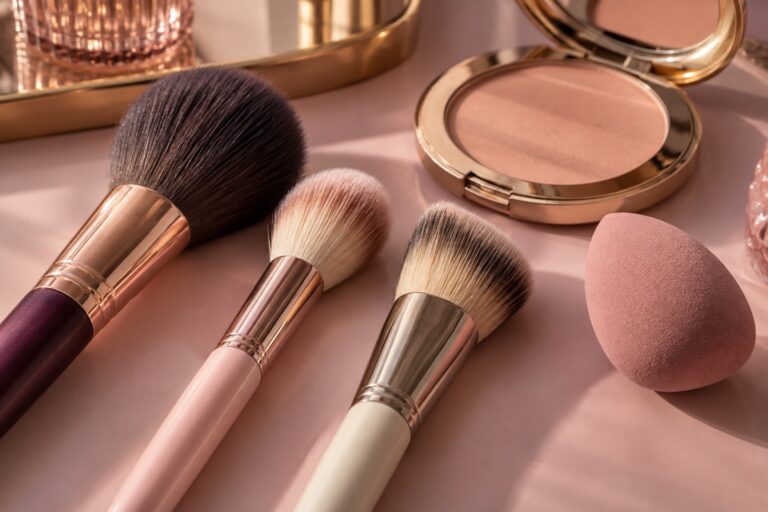
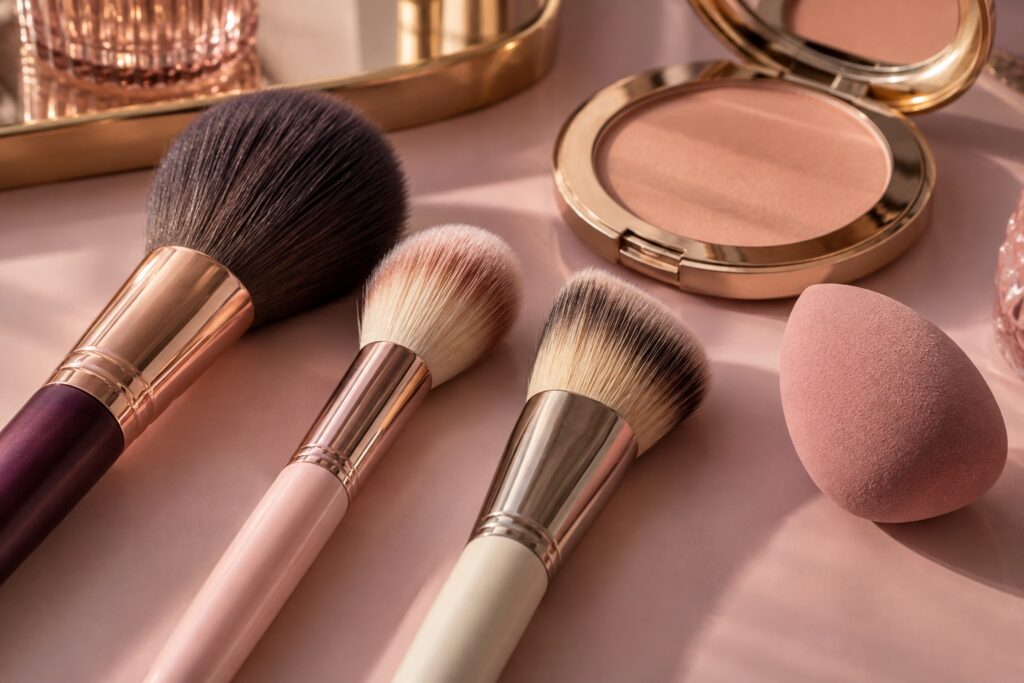
AI-created editorial photo. Not the specific reviewed product.
A brush is easier to choose when you begin with the makeup task rather than a display of unfamiliar names. Write three things: the formula you use, the area you want to cover and the movement you want to practice. Those details turn a broad shopping category into a manageable comparison.
Name the formula and the step
Separate applying a liquid base from placing powder blush or working on a small eye detail. They may all involve a brush, but the task is different. Keep the product you already own in the note so that the new tool has a defined role from the start.
Use the manufacturer’s intended-use description to narrow the list. For example, Expert Face and F80 describe liquid/cream roles, while the current Sephora #47 listing includes powder as well. These descriptions establish candidates to assess; they do not guarantee the same finish with every formula in that category.
Compare shapes in plain language
A dome, a flat head and a tapered paddle describe visibly different forms. Ask what you hope the shape will help you do, such as covering a broader area or approaching a contour. Avoid assuming that a brush called professional or expert is automatically the easiest one for your movement.
Product numbers are identifiers, not a common sizing system across brands. Keep the full name beside the number. Do not infer bristle counts, head dimensions or coverage from a number printed on a handle unless the manufacturer explicitly provides that measurement.
Choose a small, fair comparison
Start with two plausible shapes rather than buying several tools to answer the same question. If you later assess them yourself, keep the formula and intended step consistent. Record what you actually notice, such as whether a shape is awkward to position, instead of copying a marketing finish description.
A useful note might say that you want to compare a domed foundation brush with a tapered paddle around the same area. It should not say that one is guaranteed to improve coverage before you have tried it. The purpose is to make the decision observable, not to invent a score.
Include cleaning and availability
Read the brush and cleanser directions before deciding where the tool will live. A storage cup does not necessarily provide the flat drying arrangement called for by several manufacturers. Include the time when a washed brush will be unavailable, without assigning an unverified drying duration.
Finish with a one-line purchase reason: this brush fills this job with this formula. If you already own a suitable tool and cannot identify the missing function, keep the purchase on hold. A small collection with clear roles is easier to use than several similarly named brushes with no defined place in the routine.
Read next
Face Brushes Compared: Three Shapes and a Five-Brush Kit