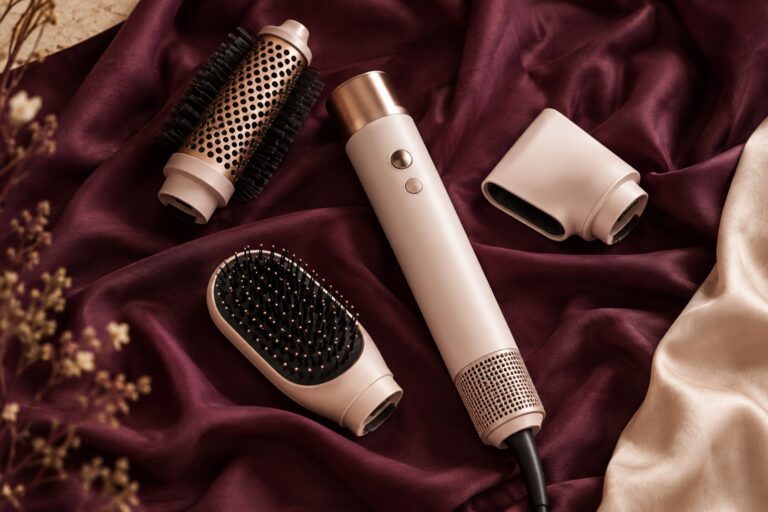
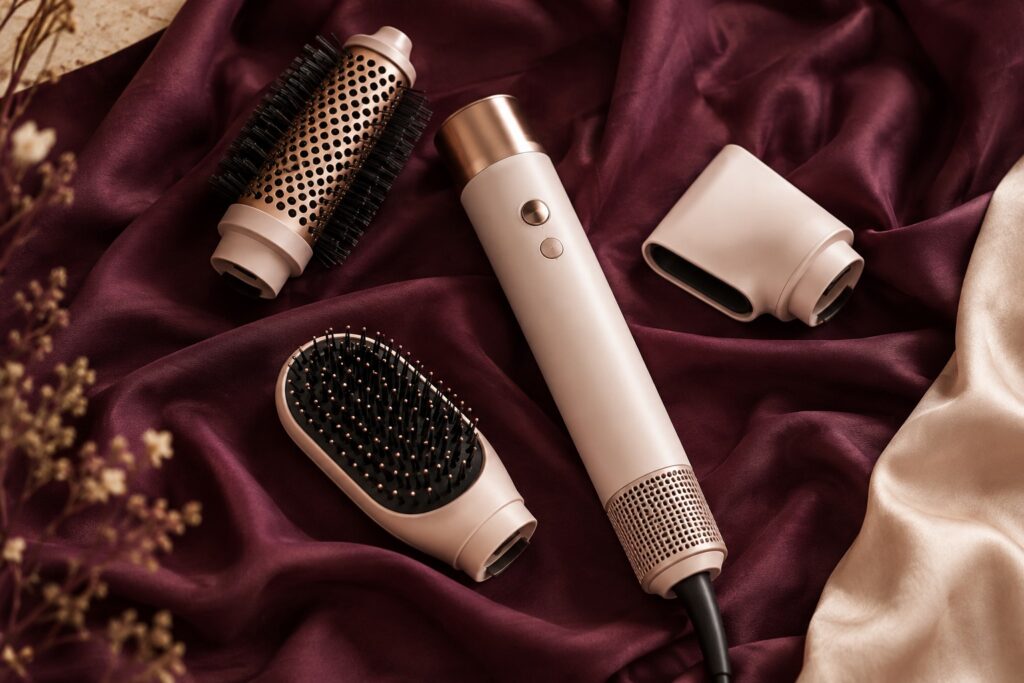
AI-created editorial photo. Not the specific reviewed product.
A useful hair appointment brief explains what you can repeat at home. It does not need a long style history or a perfect technical vocabulary. Start with the ordinary morning you want to improve, then use a few concrete details to make the conversation with your stylist more productive.
Describe the morning before describing the result
Write how much time you normally reserve for styling and which steps you already do comfortably. Separate your everyday routine from an occasional event routine. A finish you enjoy practicing on a weekend may be a poor basis for a weekday plan when you usually leave with very little preparation time.
Use plain language: you may want a brush finish, a more defined curl shape or an option that works with the tools you own. These are starting points for discussion, not promises of a particular outcome. Let the stylist clarify what the reference means for your hair and preferred level of upkeep.
Bring a short, accurate tool list
Record the exact tool and the attachments you actually use. A family name can hide a relevant difference. The reviewed Revlon PLUS centers on an oval-brush task, while Shark’s HD430 package includes separate directional curlers and brushes. Calling both simply a styler leaves useful information out of the appointment.
Mention the part you find awkward, without trying to diagnose the reason. For example, you might find changing a curler interrupts your sequence, or you might be unsure when to switch from preparation to finishing. Asking for a demonstration of one transition is more actionable than asking for an entirely effortless style.
Explain what you like in a reference image
Choose a small number of references and identify the feature that attracts you: the shape around the face, the direction of the ends or the overall amount of volume. Also name anything you do not want to repeat at home. This helps separate a visual preference from an assumption about how the photographed style was created.
Ask which parts of the result depend on daily styling and which questions need an in-person assessment. Do not assume that buying the same branded tool seen in a video reproduces its result. Lighting, preparation and technique may be unreported, so the photo is a conversation aid rather than a performance test.
Leave with one repeatable next step
At the end of the discussion, summarize the agreed routine in your own words and ask the stylist to correct misunderstandings. Keep product operating instructions separate from that summary; an appointment note should not override the manual for your exact tool.
A compact brief can contain your time budget, normal tools, preferred visual feature and one step to practice. After trying the agreed routine, record what was manageable and what still needs clarification. That gives the next appointment a useful starting point without turning everyday styling into an elaborate tracking project.
Read next
Air Stylers and Blowout Brushes Compared: Pick the Job Before the Kit